Chapter 10
Biological Rhythms and Sleep
Brain structures involved in circadian rhythm generation, light entrainment, and the sleep-waking cycle. Highlighted structures are shown in color; the rest of the brain is ghosted for context.
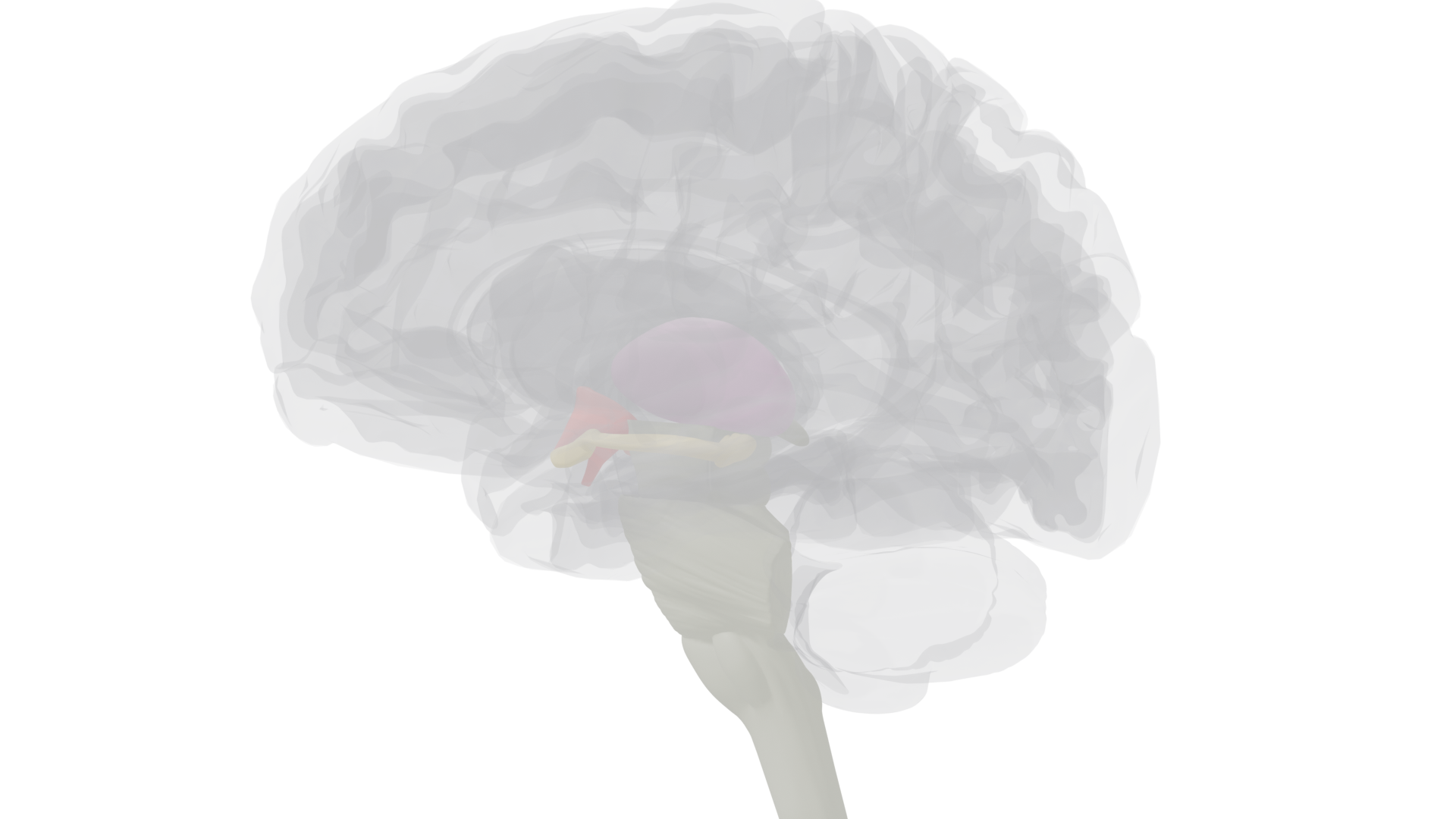
Midsagittal (midline cut) view. Hypothalamus (red) and thalamus (mauve) with brainstem structures (olive) highlighted. Cortical structures ghosted.
Key Structures
Hypothalamus
Contains the suprachiasmatic nucleus (SCN)
The hypothalamus houses the suprachiasmatic nucleus (SCN), the brain's master circadian clock. Named for its position above the optic chiasm, the SCN generates a ~24-hour rhythm through a molecular feedback loop involving the Clock, Cycle, and Period proteins. Lesions of the SCN eliminate circadian rhythms in drinking, locomotion, and hormone secretion. SCN cells removed from the brain and placed in a dish continue to show circadian rhythms for days, confirming that the clock is endogenous (generated internally, not driven by external cues).
Key experiment
Ralph & Menaker (1988) found hamsters with a tau mutation showing a 22-hour free-running period instead of the normal 24 hours. In a follow-up (1990), transplanting SCN tissue between normal and mutant hamsters showed the recipient always adopted the donor's rhythm. This is the only known case of transplanting brain tissue that transfers the donor's behavior.
Thalamus
Relay station adjacent to the hypothalamus
The thalamus sits just above the hypothalamus and serves as a major relay for sensory and motor signals. While not the primary circadian clock, the thalamus plays a role in sleep-wake state transitions and relays signals between the brainstem sleep centers and the cortex.
Brainstem
Pons, midbrain, medulla oblongata
The pineal gland sits atop the brainstem, tucked under the cerebral hemispheres. It secretes melatonin almost exclusively at night, providing a hormonal signal that tracks day length and seasons. The pineal is governed by the superior cervical ganglion (sympathetic nervous system). In mammals, lengthening nights cause prolonged melatonin release, which influences the hypothalamus and regulates seasonal breeding. Exogenous melatonin helps treat jet lag and can help blind individuals entrain to a 24-hour cycle.
Historical note
The pineal gland is one of few unpaired brain structures. Descartes proposed it as "the seat of the soul" because religious dogma held that the soul, like the pineal, is indivisible.
Retinohypothalamic Pathway
Light information reaches the SCN through a direct neural pathway from specialized retinal ganglion cells containing the photopigment melanopsin. These cells do not form images. They simply detect light to entrain circadian rhythms.
Retina
Melanopsin-containing ganglion cells
→
Optic Chiasm
Axons branch off here
→
SCN
Hypothalamus
→
Pineal Gland
Via sympathetic nervous system
→
Melatonin
Released at night
Clinical relevance
Transgenic mice lacking rods and cones but retaining melanopsin-containing ganglion cells can still entrain to light. They are blind in every other respect, but their circadian rhythms function normally. Most totally blind humans lack functional melanopsin cells, causing free-running circadian rhythms and sleep difficulties.
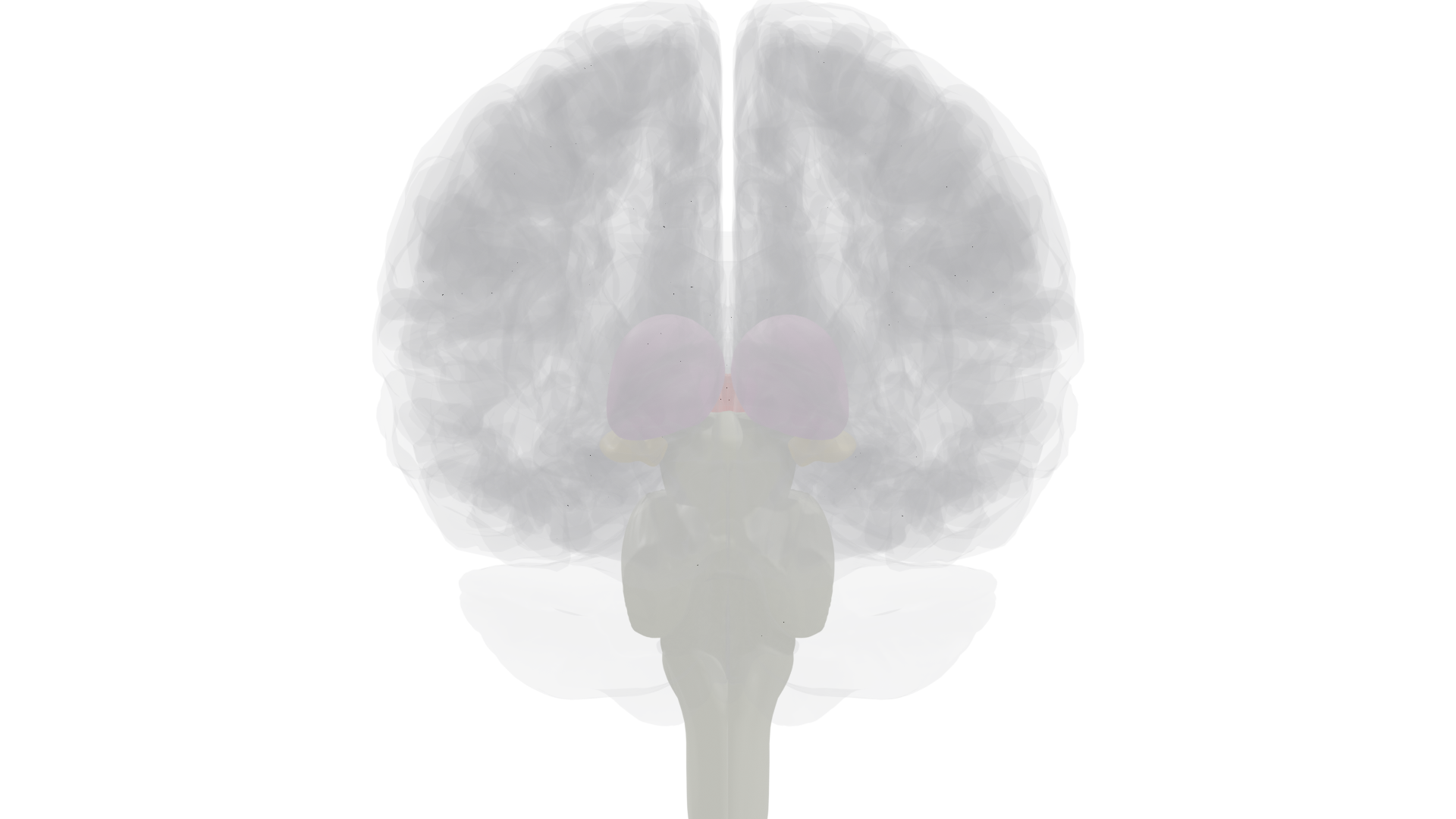
Anterior (front): thalamus visible through ghosted cortex
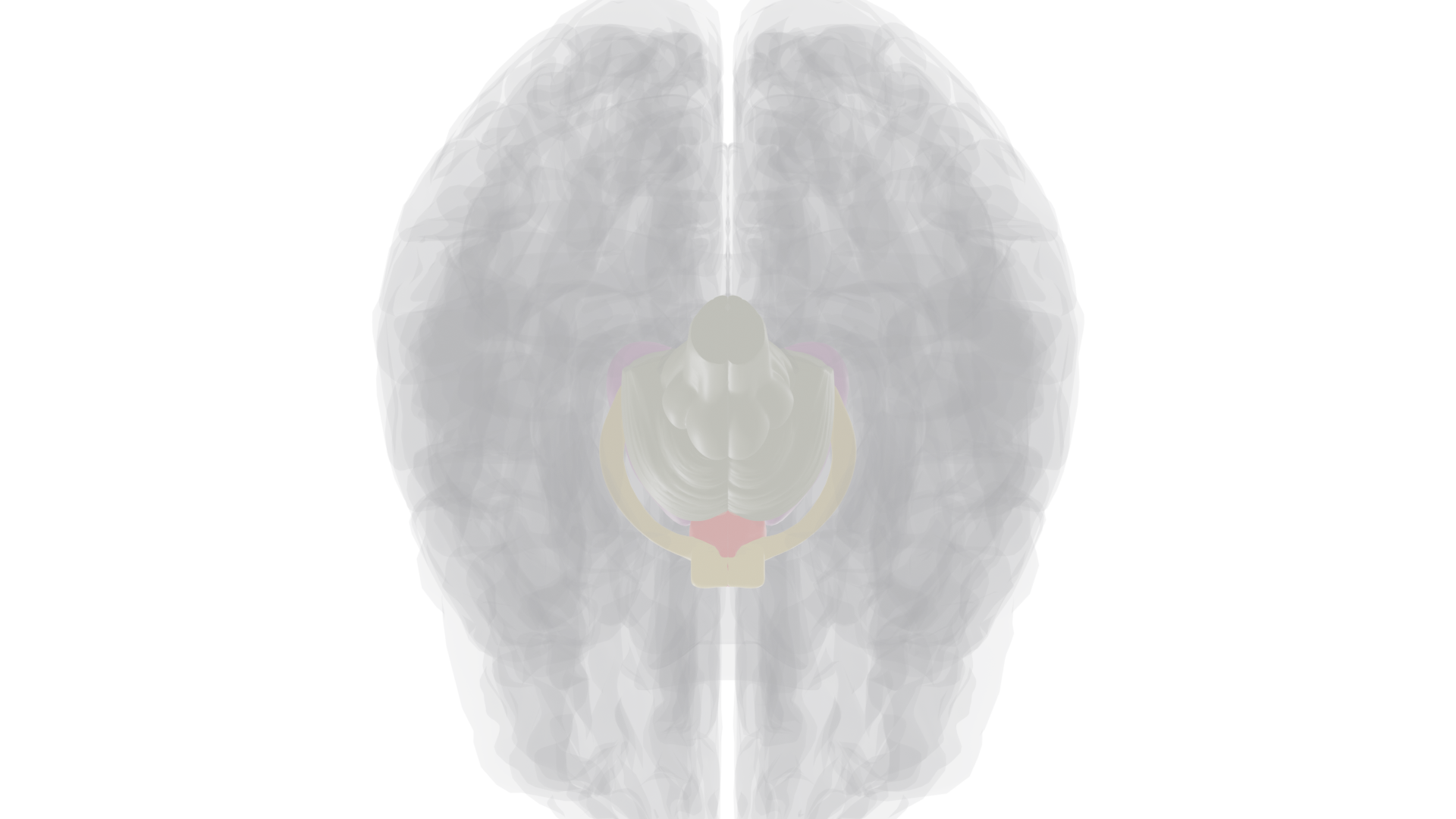
Ventral (bottom): brainstem and hypothalamus from below
Key Terms
- Circadian
- Rhythms lasting approximately one day (Latin circa + dies)
- Ultradian
- Rhythms shorter than a day (repeating more than once per day)
- Infradian
- Rhythms longer than a day (e.g., menstrual cycle, seasonal breeding)
- Entrainment
- The process of synchronizing an internal rhythm to an external cue (zeitgeber)
- Zeitgeber
- Any environmental cue that synchronizes circadian rhythms (German: "time giver")
- Free-running
- A circadian rhythm operating without external time cues, drifting from exactly 24 hours
- Phase shift
- A change in the timing of activity produced by a synchronizing stimulus
- Melanopsin
- Photopigment in specialized retinal ganglion cells that detects light for circadian entrainment
- Melatonin
- Hormone released by the pineal gland at night; tracks day length and promotes sleep onset